
Pricing Real Estate: How to Price Your Home to Sell
When it comes to selling a home, pricing real estate correctly from day one is the single most important factor in determining how fast — and how well, or even if your property sells. While many sellers focus on renovations, staging, or marketing, even the best-looking home will usually sit unsold if it’s priced incorrectly.
In this guide, we’ll break down how strategic pricing works, common mistakes to avoid, and how smart pricing can actually increase your final sale price while reducing time on market.
Why Pricing Real Estate Correctly Matters
Buyers today are well-informed. They track new listings, sold prices, and price reductions closely. If your home is priced above market value, buyers will often skip it entirely — even if it’s a perfect fit.
The reality is:
Homes receive the most attention in the first 7–14 days
Overpricing early can cause a listing to go stale
Stale listings typically sell for less, not more
Correct pricing doesn’t just affect speed, it directly impacts your negotiating power.
Step 1: Base Your Price on Sold Comparables, Not Active Listings
One of the biggest mistakes sellers make when pricing real estate is using active listings as their benchmark. Active listings reflect what sellers hope to get, not what buyers are actually willing to pay.
Instead, pricing should be based on:
Recent sold homes (last 30–90 days)
Similar size, condition, and location
Adjustments for upgrades like kitchens, bathrooms, or a new roof
Sold data reflects true market value — and that’s what buyers and appraisers rely on.
Step 2: Price at or Slightly Below Market Value
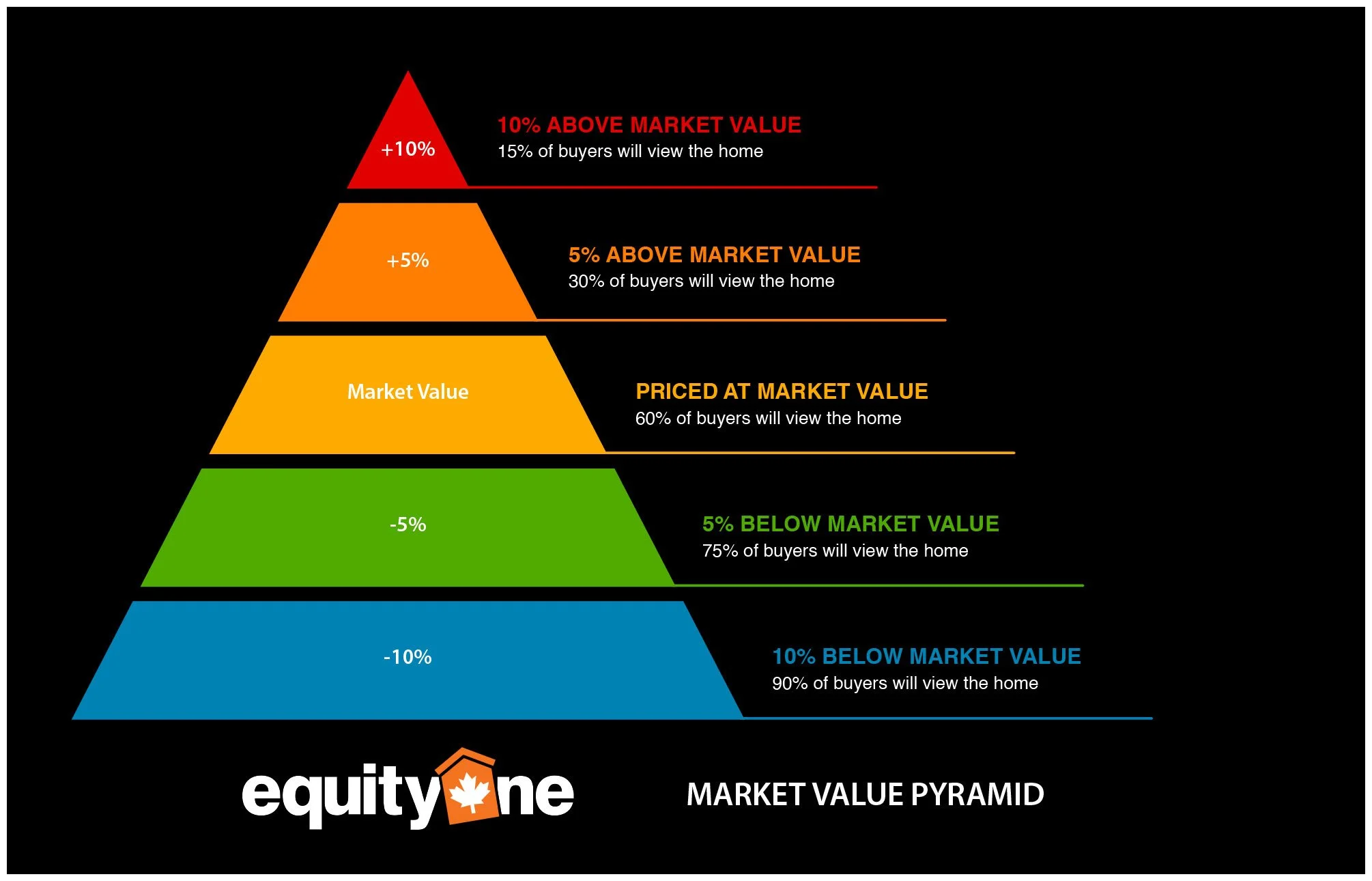
Pricing vs showings pyramid - how pricing affects showings
This may seem counterintuitive, but pricing slightly below market value often creates more interest, not less.
Why it works:
More buyers see the listing online
Showings increase dramatically
Competition can lead to multiple offers
Buyers are less likely to negotiate aggressively
In many cases, homes priced strategically sell faster and closer to — or even above — market value.
Step 3: Avoid “Testing the Market”
“Let’s try it high and see what happens” is one of the most expensive pricing mistakes sellers make.
Here’s what usually happens:
Serious buyers don’t book showings
The listing sits while competitors sell
Price reductions become inevitable
Buyers assume something is wrong with the home
When pricing real estate, momentum matters. You only get one chance to make a strong first impression.
Step 4: Understand Buyer Search Brackets
Most buyers search within specific price ranges online. Strategic pricing can dramatically increase visibility.
Example:
Estimated value: $760,000
Strategic list price: $749,900
That single adjustment places your home in more searches, more showing schedules, and more buyer shortlists — increasing the likelihood of a quick sale.
Step 5: Match Price to Condition
Buyers compare homes against others in the same price range. Your price must reflect your home’s condition honestly.
Move-in ready homes can command strong, competitive pricing
Well-maintained but dated homes benefit from slight discounts
Homes needing work must be priced clearly below renovated alternatives
No matter how much you love your home, buyers will always compare it to the best option available at that price. And buyers have a significant advantage over sellers, in that they’ve likely viewed all the homes that are similar to yours.
Step 6: Pair Pricing With Strong Presentation
Even the best pricing strategy won’t work if the presentation doesn’t match.
Successful pricing real estate strategies are supported by:
Professional photography
Clean, decluttered spaces
Minor repairs completed
Easy showing access
Price attracts buyers — presentation convinces them to act.
Step 7: Use a Clear Offer Strategy
Depending on market conditions, a fast sale may involve:
Setting a clear offer review date
Pricing to attract immediate offers
Creating urgency through limited availability
A confident pricing strategy allows you to stay in control of the process.
Common Pricing Myths to Avoid
“We can always lower the price later”
“Someone will fall in love with it”
“Our neighbour got more”
“I need to get $XXX to buy my next home”
Markets change, homes differ, and buyers move quickly. Pricing real estate based on emotion instead of data often leads to longer selling times and weaker results. And buyers don’t care what you need - only what they want to pay.
Final Thoughts: The Smart Way to Price Real Estate
Homes that sell quickly share a few key traits:
They’re priced for today’s market, not yesterday’s
They’re positioned as the best value in their category
They launch strong instead of cautiously
Pricing real estate correctly isn’t about underselling — it’s about creating demand. When demand increases, speed and price often follow.
Frequently Asked Questions On Pricing Real Estate
-
Your home is priced correctly if it attracts strong showing activity within the first 7–14 days and generates buyer interest without repeated price reductions. Proper pricing real estate strategies rely on recent sold comparables, not active listings or asking prices.
-
Yes, in many cases. Pricing real estate slightly below market value can increase visibility, create urgency, and attract multiple buyers — often leading to a faster sale and stronger final price.
-
Overpricing usually results in fewer showings, longer days on market, and eventual price reductions. Homes that sit too long often sell for less than they would have if priced correctly from the start.
-
No. Active listings reflect what sellers hope to get, not what buyers are actually paying. Pricing real estate should be based primarily on recent sold homes that are similar in size, location, and condition.
-
Extremely important. The first 7–14 days generate the most buyer attention. This is when serious buyers are watching closely and comparing options, making accurate pricing real estate strategies critical at launch.
-
Yes. When pricing real estate is done correctly and paired with strong presentation, it can create competition among buyers, which may result in multiple offers and stronger terms.
-
Condition plays a major role. Move-in-ready homes can support stronger pricing, while dated or repair-needed homes should be priced lower to remain competitive. Buyers always compare value within the same price range.
-
Absolutely. Pricing strategies vary depending on whether the market favors buyers or sellers, current inventory levels, and interest rates. What works in one market may not work in another.